
Views: 0 Author: Site Editor Publish Time: 2026-03-12 Origin: Site


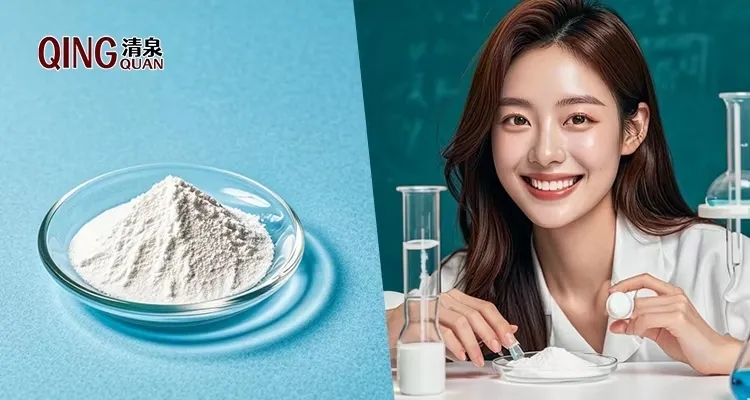
Our core product, HPMC, can provide you with higher quality products and also customize different viscosities according to your needs. Shijiazhuang Qingquan Cellulose Co., Ltd. is a cellulose manufacturer from China.

Hydroxypropyl methylcellulose is a cellulose variety with rapidly increasing production and usage. It is a non-ionic cellulose mixed ether produced through a series of reactions using epichlorohydrin and chloromethane as etherifying agents, starting from refined cotton that has undergone alkali treatment. The degree of substitution is generally between 1.2 and 2.0. Its properties vary depending on the ratio of methoxy content to hydroxypropyl content.
Hydroxypropyl methylcellulose is easily soluble in cold water but may encounter difficulties dissolving in hot water. However, its gelation temperature in hot water is significantly higher than that of methylcellulose. Its solubility in cold water is also notably improved compared to methylcellulose.

The water retention of hydroxypropyl methylcellulose depends on its dosage and viscosity. At the same dosage, its water retention rate is higher than that of methylcellulose.
Hydroxypropyl methylcellulose exhibits better adhesion to mortar during construction than methylcellulose.
Hydroxypropyl methylcellulose has better enzyme resistance than methylcellulose, with a lower likelihood of enzymatic degradation in its solution.
Hydroxypropyl methylcellulose can be mixed with water-soluble high-molecular compounds to form uniform solutions with higher viscosity. Examples include starch ethers, polyvinyl alcohol, and plant gums.
The viscosity of hydroxypropyl methylcellulose is related to the size of its molecular weight; larger molecular weight results in higher viscosity. Temperature also affects its viscosity, with viscosity decreasing as temperature increases. However, the impact of temperature on its viscosity is lower than that on methylcellulose. Its solution remains stable when stored at room temperature.
Hydroxypropyl methylcellulose is stable to acids and alkalis, with its aqueous solution being very stable within a pH range of 2 to 12. Sodium hydroxide and lime


