
Views: 0 Author: Site Editor Publish Time: 2026-04-02 Origin: Site


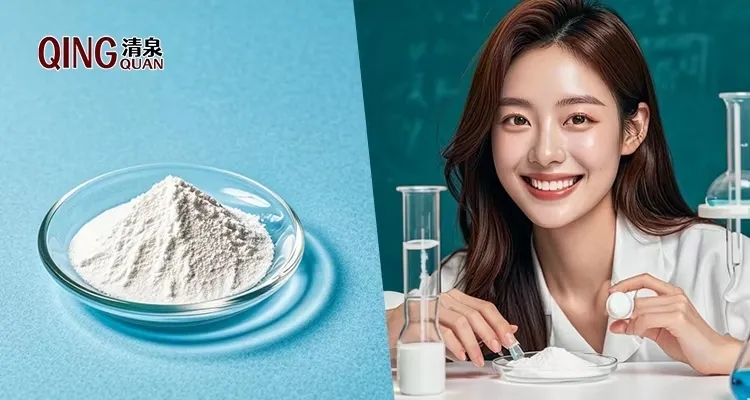
Regarding our core product—HPMC powder for construction applications—Shijiazhuang Qingquan Cellulose offers products of superior quality and can also customize various viscosity levels to meet your specific requirements. Shijiazhuang Qingquan Cellulose Co., Ltd. is a cellulose manufacturer based in China.

HPMC (Hydroxypropyl Methylcellulose) serves as a core functional additive in the fields of construction mortars, putties, and coatings. Distinguished by three key characteristics—exceptional water retention, superior thickening and thixotropy, and film formation/stabilization—it plays a pivotal role in enhancing both workability and material durability.
I. Core Characteristics and Mechanisms of Action of HPMC
HPMC is a non-ionic polymer derived from modified natural cellulose. Its molecules contain a large number of hydrophilic groups (hydroxyl, methoxyl, and hydroxypropyl groups), allowing it to dissolve in cold water to form a transparent colloidal solution. Its core functions stem from the following mechanisms:
Exceptional Water Retention: The hydrophilic groups adsorb water molecules to form a stable hydration film or colloidal structure. This effectively locks moisture within the mortar or putty, retarding evaporation and preventing rapid water absorption by the substrate, thereby ensuring the complete hydration of cement or lime-calcium binders. This fundamentally mitigates issues such as cracking, hollowing, and powdering.
Thickening and Thixotropy: The long-chain molecules swell and entangle within the water medium to form a three-dimensional network, significantly increasing the system's viscosity. Simultaneously, this imparts thixotropic properties: the material exhibits high viscosity and excellent sag resistance when at rest, yet its viscosity decreases during mixing or application, resulting in a smooth, easy-to-spread consistency that vastly improves the tactile feel of the application process.
Film Formation and Stabilization: Upon drying, it forms a tough, transparent, and flexible film that fills the pores within the material matrix and enhances internal cohesion. In coating formulations, it acts as a protective colloid and suspending agent for pigments, preventing sedimentation and stratification, thereby improving both storage stability and application performance.
Non-ionic Compatibility: It remains stable within a pH range of 3 to 11 and exhibits excellent compatibility with cement, lime, gypsum, various fillers, and other additives, without interfering with the system's chemical reactions or strength development.
II. Key Roles in Three Major Construction Materials
1. Mortars (Plastering / Masonry / Tile Adhesives): Strong Water Retention, Crack Resistance, and Ease of Application
Water Retention and Viscosity Enhancement: It effectively locks in moisture, extending the open time (working time) of the mortar, thereby enabling smooth and unhurried application even in high-temperature or dry environments. It also prevents bleeding and segregation, resulting in a more homogeneous mortar mixture.
Enhanced Strength and Durability: By ensuring the complete hydration of the cement binder, it significantly improves both compressive strength and bond strength. Furthermore, it minimizes drying shrinkage, thereby reducing the risk of hollowing and cracking. Optimized Workability: Enhances cohesion and wall-hanging properties, preventing sagging during vertical plastering; improves lubricity, making application effortless and highly efficient.
Recommended Dosage: Dry-mix mortar: 0.3‰–0.5‰ (0.03%–0.05%).
2. Putty Powder: Easy to apply, non-sagging, high strength, scrub-resistant.
Upgraded Application Feel: Imparts excellent thixotropy, ensuring smooth and effortless application; allows for thick-layer application without sagging or shrinkage, and sets quickly.
Water Retention & Crack Resistance: Delays drying to allow for complete reaction between lime/cement and water, thereby reducing powdering and micro-cracking; forms a dense film upon drying, enhancing scrub resistance and surface hardness.
Enhanced Adhesion: Improves the bonding strength between the putty and the substrate (concrete, brick walls, lightweight walls), minimizing hollowing and detachment issues.
Recommended Dosage: Standard putty: 0.5‰–1.0‰; Thick-layer/Crack-resistant putty: 1.0‰–1.5‰.
3. Water-based Coatings: Greater stability, excellent leveling, anti-splatter properties.
Suspension Stability: Acts as a thickener to form a protective colloid, preventing the sedimentation and stratification of pigments/fillers, thereby extending shelf life.
Rheology Control: Improves thixotropy and leveling properties; prevents splashing and sagging during application, resulting in a uniform paint film with excellent gloss upon drying.
Film Formation Support: Aids in the formation of a continuous paint film, enhancing water resistance, scrub resistance, and adhesion.
Recommended Dosage: Latex paint: 0.1‰–0.3‰ (adjust according to specific viscosity requirements).

III. Selection and Application Guidelines
Selection Based on Viscosity:
Low Viscosity (400–1000 mPa·s): Suitable for self-leveling mortars and thin-coat paints; offers excellent flowability and leveling properties.
Medium Viscosity (4000–10000 mPa·s): General-purpose grade; suitable for most mortars, putties, and standard paints, providing a balanced combination of water retention and workability. High Viscosity (15,000–200,000 mPa·s): Suitable for thick-bed putties, high water-retention mortars, and highly thixotropic coatings; offers excellent sag resistance and superior water retention.
Dissolution and Addition: Premix thoroughly with dry powder ingredients before adding water to prevent clumping; alternatively, add slowly while stirring with a high-speed disperser to ensure complete dissolution.
Incompatibilities: Avoid direct contact with strong electrolytes (such as high-concentration salts) to prevent salting-out and sudden viscosity drops.


