

Why your tile adhesive isn‘t working. It’s not the cement. It‘s the additive.
Ask any tile setter who’s been in the game for 15+ years. Cement is the bones. Additives are the tendons. Bones alone won't hold when the load gets heavy.
Tiles keep getting bigger. Porcelain and large-format slabs are every where now. Water absorption keeps dropping. And walls? Smoother than ever. Regular cement mortar just doesn't cut it anymore. It‘s not your technique. It’s the material.
Here are five problems you‘ve probably run into. Let’s walk through each one and see what actually works.
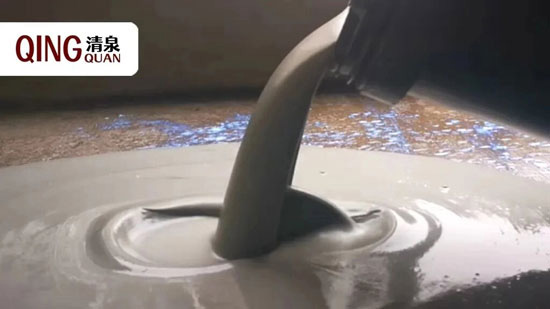
1. Large tiles sliding down before the adhesive sets
This one drives people nuts.
A 600×1200 slab goes on straight. Ten minutes later it‘s crooked. The bottom edge is thicker than the top. Grab a level and it’s off by a few millimeters.
You didn‘t misalign it. The adhesive moved on its own.
Regular mortar has low yield stress. Think of yield stress as the adhesive’s ability to stand still without flowing. When yield stress is too low, the adhesive acts like thin soup. Gravity wins every time.
The fix is high-viscosity HPMC.
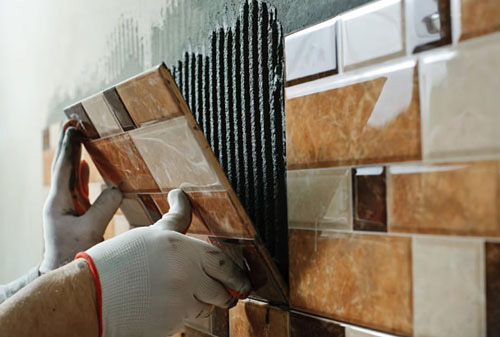
HPMC forms a 3D web inside the mortar. That web is stable when nothing‘s moving. Tiles sit on top without sinking. But when you run a trowel over it, the web breaks apart temporarily. The adhesive turns thin again. Easy to spread.
That’s thixotropy. Simple version: stiff when still, fluid when moving. Exactly what a tile adhesive needs.
We ran tests. Regular mortar sagged over 2mm. Add 0.3% high-viscosity HPMC and sag dropped below 0.5mm. Night and day.
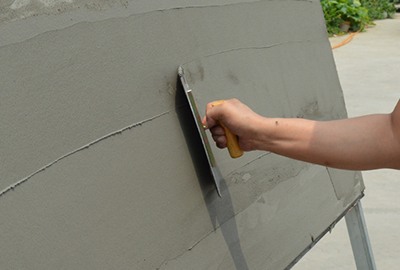
2. Tiles don‘t bond. Hollow sound when you tap.
This one’s worse.
Looks fine from the outside. Tap it a few days later with a little hammer. Dull hollow sound. Big empty patches. Some tiles you can pull right off the wall.
Two reasons. Either the cement didn‘t get enough water, or the bonding film between the tile and the adhesive never formed properly.
Let’s start with water.
Cement needs water to hydrate. That‘s how it gains strength. But modern walls – lightweight blocks, drywall, old painted surfaces – suck up water like a sponge. You put mortar on the wall, and the wall pulls the water out before the cement even starts hydrating. Surface dries. Inside stays soft.
HPMC holds water back.
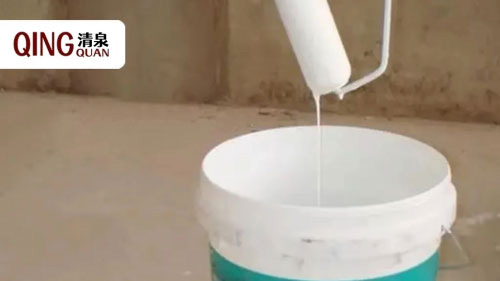
HPMC molecules have water-loving groups that grab onto water and don‘t let go. Water moves slower. Cement stays wet longer. Hydrates fully. Gets strong. We measured it. Regular mortar holds less than 80% water. Add our HPMC and you’re over 95%.
Now the film.
What really bonds a tile isn‘t just cement. It’s a polymer film that forms between the tile and the adhesive. That film needs RDP.
RDP is redispersible polymer powder. Dry as powder in the bag. Add water and it turns back into liquid latex. When the water evaporates, it leaves behind a flexible film that bridges the gap between cement and tile. Pulls both sides together like a good clamp.
Low-absorption tiles – porcelain, full-body, polished – soak up almost no water. Below 0.5% in many cases. Cement can‘t penetrate. Without RDP, you’re basically gluing with sand.
Our RDP-5010 keeps bond strength above 1.0 MPa even after soaking in water. Regular mortar struggles to hit 0.5 MPa dry.
3. Adhesive skins over before you can set the tile
You know this scene.
You comb the adhesive. Go to press the tile in place. Before you get it aligned, the surface has already formed a skin. You try to adjust. Tile pops off. Adhesive stays on the wall. And that layer on the wall? Dead. No tack left.
That‘s short open time.
Open time is the window after you spread the adhesive but before you can’t adjust the tile anymore. Should be at least 20 to 30 minutes. A lot of adhesives die in 10.
Water loss is the culprit. Hot days. Windy days. Thirsty walls. Water evaporates or gets sucked away. Skin forms early.
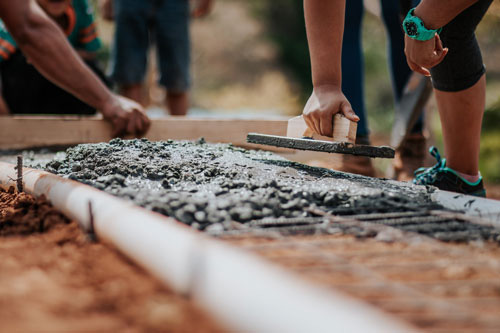
HPMC slows water loss. Same mechanism we talked about. Water stays put. Skin forms later. We tested using EN1346 method. Regular mortar gave less than 10 minutes open time. Add 0.3% HPMC and you get over 30 minutes.
What does that mean on the job? Workers don‘t have to rush. Tile goes in crooked? Lift it. Adjust it. No waste. No redo. Less material thrown away. Faster day overall.
4. Applying the adhesive is exhausting
Some installers refuse to use certain adhesives. Not because they don’t hold. Because they‘re brutal to work with.
Too thick. Won’t comb. Too thin. Slumps off the trowel. Nothing feels right.
This is about workability.
A good tile adhesive should feel like room-temperature butter. Smooth. No drag. When you comb it, the ridges stand up clean. They don‘t collapse. When you press the tile, the adhesive doesn’t stick to the tile back or pull off the trowel.
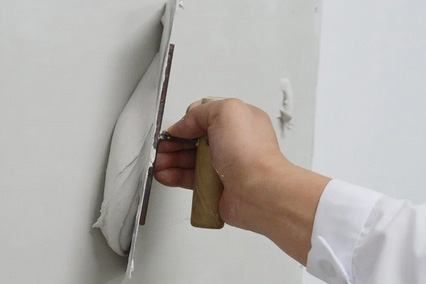
HPMC does two things here.
First, lubrication. HPMC molecules are long. They sit between cement grains like tiny ball bearings. Less friction. Trowel slides easy.
Second, thixotropy again. Soft when moving. Stiff when still. So troweling is easy. After the tile is pressed, the adhesive firms up and holds.
MHEC actually beats HPMC here. MHEC has better water-loving properties and higher thickening efficiency per gram. The feel under the trowel is smoother. Less stick. Faster coverage.
5. Cracks everywhere after drying
Cracks aren‘t just ugly.
Water gets in. Grout lines turn dark. Mold grows behind tiles. Worst case – whole wall gets ripped out and redone.
Two types of cracks. Surface cracks – hairline stuff. And deep structural cracks.
Surface cracks usually mean poor water retention. Top layer dries too fast. Bottom layer is still wet and shrinking. They pull against each other. Crack. HPMC keeps everything wet. Top and bottom dry together. No surface cracks.
Deep cracks are different. Usually mean the substrate moved. Or temperature changed. Or the mortar itself was too brittle.
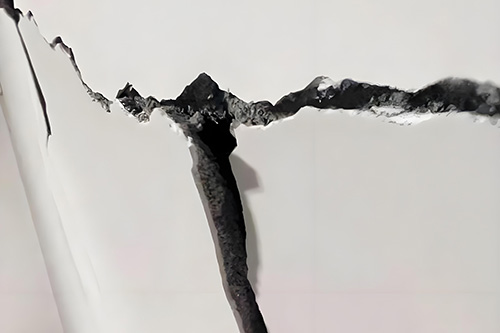
RDP solves deep cracks. That polymer film we talked about? It‘s flexible. Substrate shifts a little? Film stretches. Temperature swings? Film expands and contracts without tearing.
In engineering terms, RDP lowers the elastic modulus. Simple version: the mortar becomes softer. Less likely to snap.
We flex-tested our RDP-5010. Bent it around a 100mm diameter curve. No cracks. Try that with regular mortar and it shatters.
Which product should you use?
You probably know where your problem fits by now.
Here are three direct options.
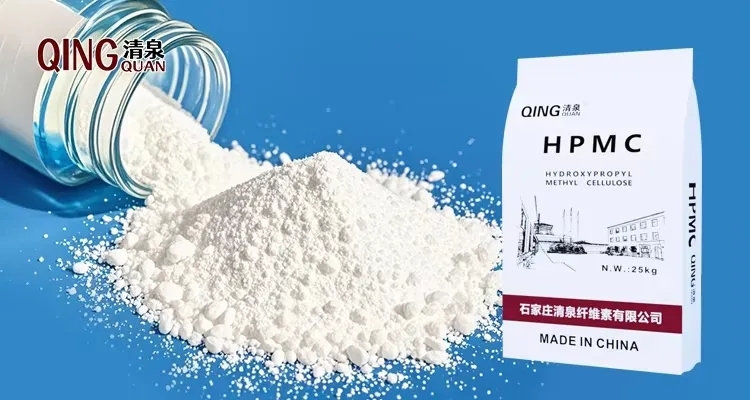
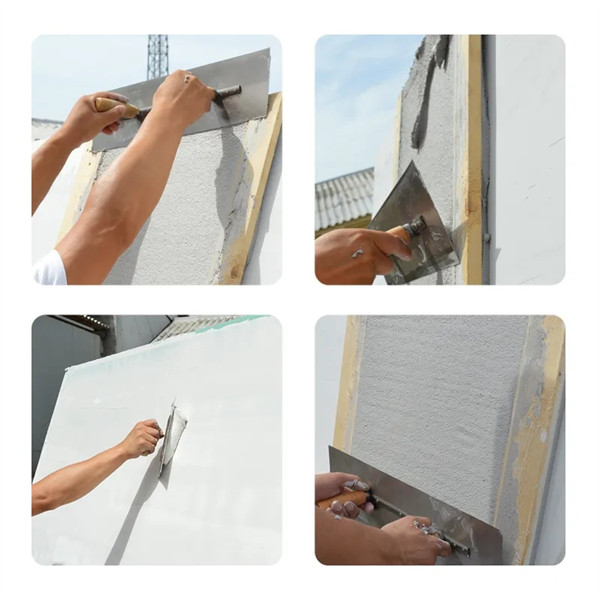
1. Standard thin-bed. Regular tiles. Indoor walls.
Use QingQuan™ HPMC 100K.
100,000 cP viscosity. Good water retention. Best cost per kilo. Add 0.25% to 0.35% of total dry mix. Covers most standard jobs.
2. Large slabs. Porcelain. Polished tiles. Need zero sag.
Use QingQuan™ MHEC 150K.
150,000 cP viscosity. Higher water retention. Better thixotropy. Large-format tiles won‘t slip. Open time pushes past 40 minutes.
3. High-performance jobs. Flexible requirements. Exterior walls. Areas with vibration.
Use HPMC 100K + RDP-5010 together.
HPMC handles water retention and sag resistance. RDP handles bond strength and flexibility. Together they outwork either one alone. Bond strength easily clears 1.2 MPa. Flex without cracking.
Browse all tile adhesive additives →
Who we are
You‘ve read this far. Fair to ask why you should trust us. Learn more about QingQuan →
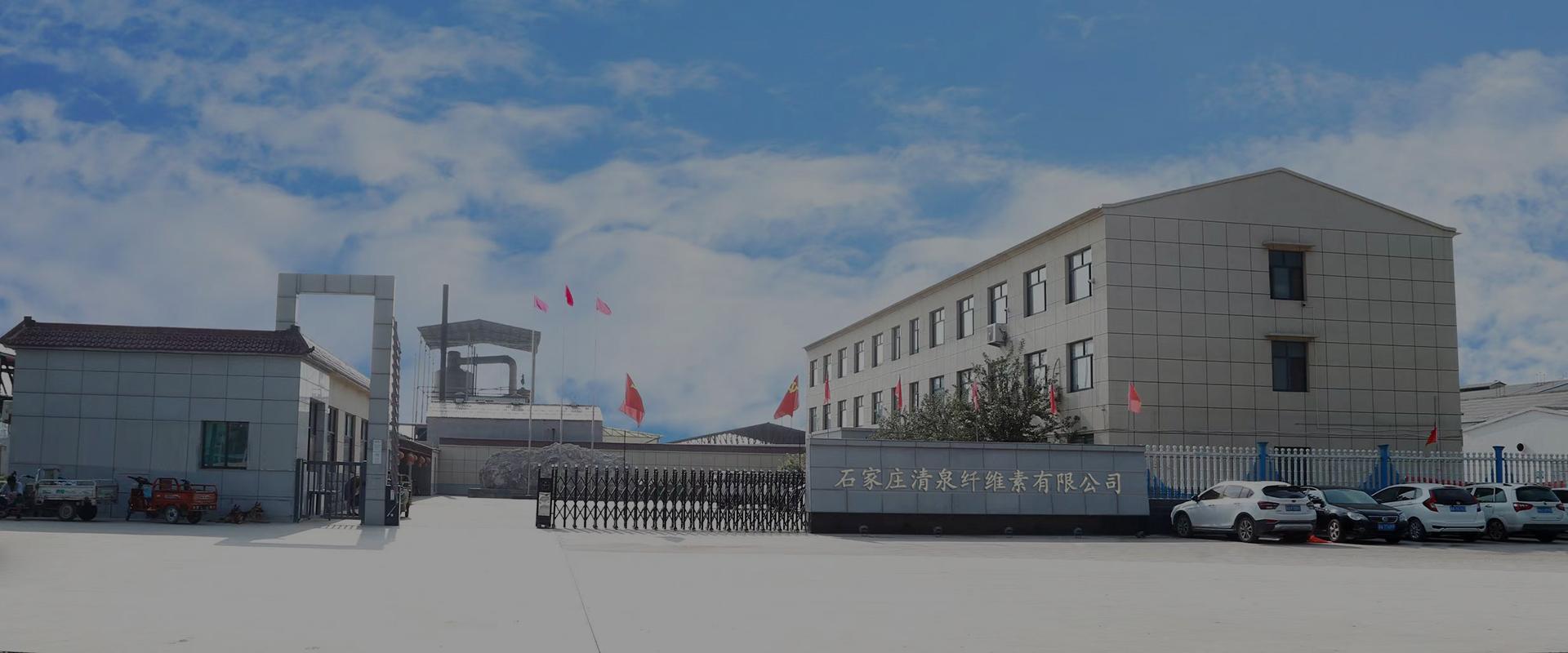
We own the plant in Shijiazhuang.
Not a trader. Not a repackager. We make the material. We ship it direct.
25,000 tons per year.
That‘s our HPMC and MHEC capacity alone. Not a small shop. Not a side business.
36 countries served.
US, Canada, Russia, Japan, South Korea, Southeast Asia, Africa. Over 300 active customers. Not just shipped to port. Actually used in real jobs overseas.
Tech support is included.
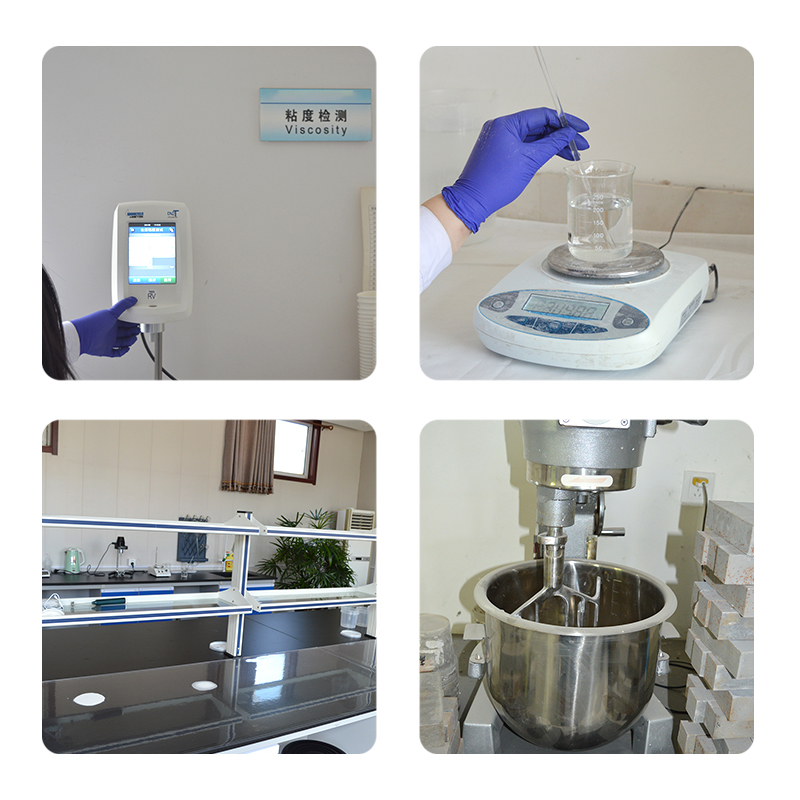
Formula not working right? Can’t pick the right viscosity? Substrate too tricky? Send us a sample. Our lab tests it. We come back with a recommendation and a fix. No charge. Our technical people aren‘t salespeople. They solve problems.
Want to try it?
You’ve already dialed in your formula. Just need the right additive to confirm.
Or you‘re still figuring out the formula. Not sure where to start.
Either way. Reach out.
We’ll send you samples. Industrial grade. Pure stock. Straight from the plant. Test it in your lab. Test it on your wall. Works? Good. Doesn‘t work? Tell us what happened. We’ll adjust and send another.
Here‘s how to reach us.
Phone: +86-185 3333 1616
Email: info@qq-cellulose.com
WhatsApp: 86 185 3333 1616
Address: No. 245 Yuhua East Road, High-tech Zone, Shijiazhuang, Hebei, China
【Request Free Sample / Talk to a Technician】
Let me know which topic you want next – EIFS exterior insulation or self-leveling underlayment. Same style. Same depth. No AI filler.