
Views: 0 Author: Site Editor Publish Time: 2026-01-09 Origin: Site


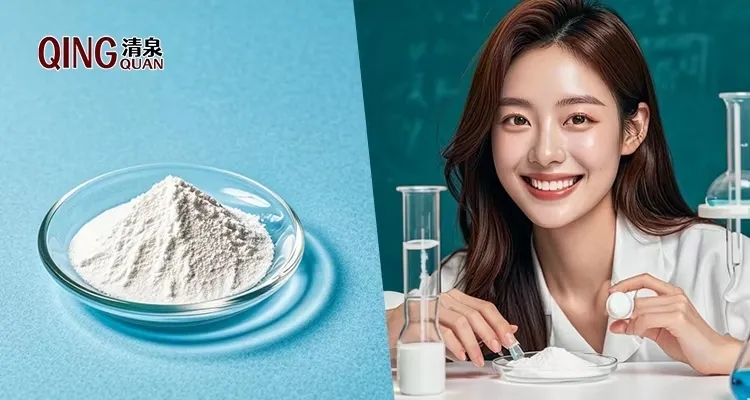
HPMC building chemical powder is one of our best-selling products, offering low price and high quality. It can be used as a thickening and water-retaining agent in building plastering applications. Shijiazhuang Cellulose Co., Ltd. is a cellulose manufacturer from China and can provide you with a sufficient supply of this product.

Hydroxypropyl methylcellulose (HPMC) is a white or nearly white powder and a non-ionic cellulose ether that is soluble in cold water. In building materials systems, it simultaneously performs four tasks: water retention, thickening, bonding, and improving workability, and is considered a versatile "behind-the-scenes" ingredient.
I. Five Key Characteristics Determining Its Value
Efficient Water Retention: It can "retain" water within the mortar or putty, preventing it from being absorbed by the substrate or evaporating too quickly, significantly reducing the risk of cracking and powdering.
Thickening-Suspension Synergy: It provides the slurry with a "paste-like" structure, resulting in a smoother application; at the same time, it prevents heavy fillers from settling, improving storage stability.
Thermally Reversible Gel: The aqueous solution transforms into a gel when heated to approximately 50–90°C and reverts back to a liquid upon cooling. This transition point should be noted during hot seasons.
Surface Activity and Film Formation: The solution can reduce surface tension and form a transparent film after drying, contributing to surface gloss and sealing properties.
Wide pH Tolerance Range: It is chemically stable in the range of 3–11, resistant to mold and enzymes, facilitating long-term storage and transportation of finished products.
II. "Role Division" in Typical Building Material Scenarios
Cement Mortar/Concrete: A dosage of 0.2%–0.4% can bring the water retention rate close to 100%; exceeding 0.6% will cause a sharp decrease in fluidity, and the 28-day compressive strength loss can reach more than 70%. In foamed concrete, it can also stabilize foam and reduce bleeding.
Tile Adhesive: Water retention ensures continuous hydration of cement, and thickening provides anti-slip "grip," essential for thin-bed application.
Plaster/Putty: It slows down the hydration rate of gypsum, extending the working time; it prevents cracking due to rapid water loss and makes application smoother.
Exterior Wall Insulation System: Both bonding mortar and rendering mortar require high water retention to ensure sufficient cement hardening and the formation of a strong interface with EPS and rock wool boards.
Architectural Coatings and Sealants: In latex paint, it acts as a rheological additive, preventing splashing and sedimentation; in cement-based sealants, it provides both water retention and color uniformity.

III. Four "Criteria" for Selection and Use
Viscosity: Below 40,000 mPa·s is suitable for pumping and self-leveling; above 100,000 is suitable for thick-layer tile adhesives and putties, with excellent hanging performance. Dosage: The common range is 0.1%–0.5%, but the optimal dosage must be determined through testing to find the "inflection point." Too high a dosage will both reduce strength and increase costs.
Gelation Temperature: In summer or tropical regions, prioritize models with a gelation temperature ≥70℃ to prevent sudden thickening of the mortar.
Powder Fineness: Smaller particle size leads to faster dispersion in cold water, reducing "fish-eye" lumps; the "dispersion first, then dissolution" process is often used on-site.
IV. Two "Red Lines" to Remember
Strength Reduction: While HPMC improves workability, it significantly reduces the compressive and flexural strength of the hardened material. It should be used cautiously or avoided in structural load-bearing concrete.
Dissolution Order: Never pour the powder directly into a large amount of cold water. The correct method: Add 1/3 of the cold water first → slowly sprinkle in the HPMC while stirring → after forming a uniform slurry, add the remaining cold water or ice water, and continue stirring until transparent and free of particles.
In summary: HPMC is not a "strength contributor," but a "workability magician." By precisely matching the viscosity, dosage, and gelation temperature, it can cost-effectively solve problems such as poor water retention, easy cracking, and poor workability in areas such as plastering, tile laying, and insulation systems.


