
Views: 0 Author: Site Editor Publish Time: 2026-01-26 Origin: Site


Shijiazhuang Qingquan Cellulose Co., Ltd. is a manufacturer of HPMC/PVA/CMC/MHEC/HEC from China. Our products are of excellent quality and reasonably priced, and are widely used as thickeners and water retention agents, enjoying popularity among customers worldwide.

Hydroxypropyl methylcellulose (HPMC)is a non-ionic cellulose ether polymer. Depending on the degree of substitution and modification of the substituent groups, it exhibits different chemical properties. It is a non-ionic, odorless, and tasteless white cellulose ether powder.
HPMC can be used in construction materials, industrial coatings, ceramics, textiles, agriculture, and daily chemical products.

Uses of Hydroxypropyl Methylcellulose (HPMC):
1. Construction Industry: HPMC is used as a water-retaining agent and retarder in cement mortar, giving the mortar pumpability. It acts as a binder in plaster, gypsum, putty, or other building materials, improving workability and extending working time. It is used as an adhesive and reinforcing agent for tiling, marble, and plastic decoration, and can also reduce cement consumption. HPMC's water-retention properties prevent the mortar from cracking due to drying too quickly after application, enhancing the strength after hardening.
2. Ceramic Manufacturing: HPMC is widely used as a binder in the manufacture of ceramic products.
3. Coatings Industry: HPMC is used as a thickener, dispersant, and stabilizer in the coatings industry, exhibiting good compatibility in both water and organic solvents. It is also used as a paint remover.
4. Ink Printing: HPMC is used as a thickener, dispersant, and stabilizer in the ink industry, exhibiting good compatibility in both water and organic solvents.
5. Plastics: HPMC is used as a molding release agent, softener, and lubricant.
6. Polyvinyl Chloride (PVC): HPMC is used as a dispersant in PVC production and is a main auxiliary agent in the suspension polymerization of PVC.
7. Others: HPMC is also widely used in the leather, paper products, fruit and vegetable preservation, and textile industries. Hydroxyethyl cellulose (HEC) is a non-ionic cellulose ether made from natural polymer cellulose through a series of etherification reactions. It is an odorless, tasteless, and non-toxic white powder or granule that dissolves in cold and hot water to form a transparent, viscous solution. It is insoluble in common organic solvents, and its solubility is not affected by pH. It possesses thickening, binding, dispersing, emulsifying, film-forming, suspending, adsorbing, surface-active, water-retaining, and salt-resistant properties.
HECis widely used in suspensio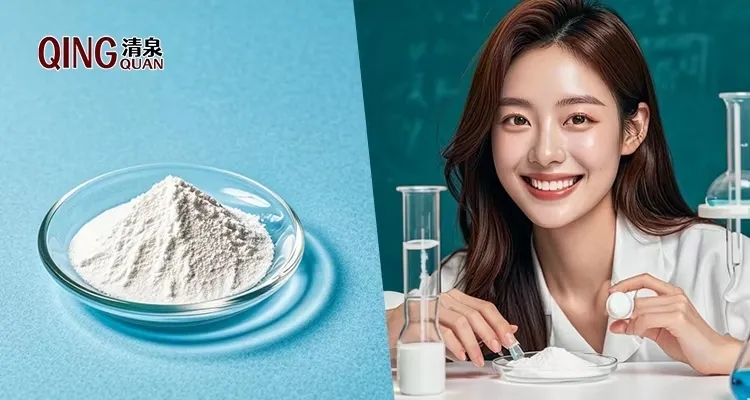 n polymerization of polystyrene, expandable polystyrene, emulsions and acrylic latex coatings, water-in-water multi-color coatings, daily chemicals, oilfield drilling, building materials, textiles, printing and dyeing, and other fields.
As a non-ionic surfactant, HEC, in addition to its thickening, suspending, binding, emulsifying, film-forming, dispersing, water-retaining, and protective colloid properties, also has the following characteristics:
1. HEC is soluble in hot or cold water and does not precipitate at high temperatures or boiling, giving it a wide range of solubility and viscosity characteristics, and non-thermo-gelling properties;
2. HEC is non-ionic and can coexist with a wide range of other water-soluble polymers, surfactants, and salts, making it an excellent colloidal thickener for solutions containing high concentrations of electrolytes;
3. HEC has twice the water retention capacity of methylcellulose and has better flow regulation properties;
4. HEC has the weakest dispersing ability compared to the commonly recognized methylcellulose and hydroxypropyl methylcellulose, but it has the strongest protective colloid ability.
Uses of HEC: It is generally used as a thickener, protective agent, binder, stabilizer, and additive in the preparation of emulsions, gels, ointments, lotions, eye drops, suppositories, and tablets. It is also used as a hydrophilic gel, a framework material, and in the preparation of framework-type sustained-release preparations. It can also be used as a stabilizer in food applications.


