


Hydroxypropyl Methyl Cellulose improves the homogeneity of cement-based plastering mortars, making them easier to apply with a trowel. It also enhances sag resistance, liquidity, and pumpability, resulting in better working efficiency. The increased water retention extends the mortar’s usability and ensures improved hydration and solidification, leading to higher mechanical strength. Additionally, HPMC helps control air entrainment, preventing surface cracks and ensuring a smooth and durable finish.
Improved mortar homogeneity for easier application
Enhanced sag resistance and liquidity for better pumpability
Increased water retention for superior hydration and solidification
Air entrainment control to reduce surface cracking and achieve a smooth finish
In gypsum-based products, Hydroxypropyl Methylcellulose (HPMC) improves the consistency of the mortar, allowing for better trowel application and improved sag resistance. HPMC increases the water retention, which is beneficial for hydration and solidification processes, ensuring the mortar attains high mechanical strength. Furthermore, it controls the uniformity of the mortar and helps create an ideal surface finish.
Improved consistency for smoother trowel application
Increased water retention for effective hydration and solidification
Enhanced uniformity for a superior surface finish

Hydroxypropyl Methyl Cellulose enhances the adhesion of masonry mortar to surfaces, improving its water retention and increasing overall mortar strength. It also improves the lubricity and plasticity, making the mortar easier to apply and saving time and construction costs. HPMC products with particularly high water retention are suitable for highly water-absorbent bricks.
Improved adhesion to masonry surfaces
Increased water retention and enhanced mortar strength
Better lubricity for easier application and reduced construction time
High water retention for use with water-absorbent bricks
Hydroxypropyl Methyl Cellulose (HPMC) plays a vital role in panel joint fillers by improving water retention, which extends the opening time and boosts working efficiency. It acts as a lubricant, simplifying mixing, and helps reduce shrinkage and cracking in the filler. HPMC also enhances adhesion, providing a smooth and flat texture for a better surface finish.
Excellent water retention and extended open time
Superior lubrication for easier mixing
Reduced shrinkage and cracking for better surface quality
Enhanced adhesion for a smooth texture

HPMC is widely used in ceramic tile adhesives to facilitate the dry mixing of ingredients without clumping. It improves application speed and performance, helping save time and reduce labor costs. Additionally, HPMC extends the opening time, which enhances the adhesion and overall efficiency of tile installation.

Improved dry mixing and faster application
Extended opening time for better tile adhesion
Increased application efficiency and reduced labor costs
Hydroxypropyl Methyl Cellulose enhances the viscosity and serves as an anti-settling additive in self-leveling flooring materials. It improves the liquidity and pumpability, resulting in better floor leveling efficiency. Additionally, HPMC controls the water retention and shrinkage, reducing the potential for cracking and providing a smoother, more durable flooring finish.

Increased viscosity and anti-settling properties
Improved liquidity and better floor leveling efficiency
Reduced cracking and shrinkage
In water-based coatings, Hydroxypropyl Methylcellulose prevents solid precipitation, extending shelf life while enhancing biological stability. It improves liquidity, providing anti-sag, splash-proof, and leveling properties, ensuring an excellent surface finish.
Prevents solid precipitation and extends shelf life
Improved liquidity and anti-sag properties
Superior surface finish with excellent leveling
HPMC helps wallpaper adhesives dissolve quickly without lumps, promoting easier mixing. It also provides excellent bond strength, ensuring that wallpaper adheres firmly to the wall.
Quick dissolution without clumping
High bond strength for superior adhesion
Hydroxypropyl Methyl Cellulose enhances the bonding and lubricity of extruded cement panels, improving their processing properties. It increases green strength, facilitates hydration and solidification, and improves the yield of finished products.
Improved bonding and lubricity for better processing
Increased green strength and hydration efficiency
Higher yield of finished products
Dedicated Hydroxypropyl Methyl Cellulose (HPMC) products for ready-mixed mortar ensure superior water retention, ensuring full hydration of cementitious materials. This prevents bond strength reduction caused by rapid drying and minimizes cracking due to drying shrinkage. HPMC also has a mild air-entraining effect, which improves the strength and trowelability of ready-mixed mortar. Furthermore, it extends the open time, making it easier for construction workers to apply.
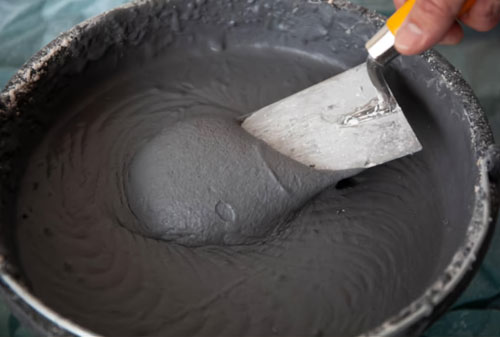
Superior water retention for full hydration
Prevents bond strength loss and minimizes shrinkage cracks
Mild air entrainment for improved strength and trowelability
Extended open time for easier application
Hydroxypropyl Methylcellulose (HPMC) is an essential ingredient in modern building materials. Its diverse applications, from cement-based plastering mortars to tile adhesives and self-leveling flooring materials, make it indispensable in the construction industry. By enhancing water retention, adhesion, and workability, HPMC improves the overall performance and durability of building materials. With the growing demand for high-performance construction materials, the use of HPMC is set to continue its pivotal role in enhancing building material formulations worldwide.


