
Views: 0 Author: Site Editor Publish Time: 2025-12-30 Origin: Site


The main properties of hydroxyethyl cellulose produced by Shijiazhuang Qingquan Cellulose Co., Ltd. are that it is soluble in both cold and hot water, has no gel characteristics, a wide range of substitution degree, solubility and viscosity, good thermal stability (below 140°C), and does not precipitate under acidic conditions. Hydroxyethyl cellulose solutions can form transparent films and have non-ionic characteristics, meaning they do not interact with ions and have good compatibility.

1. Water retention, leveling, and film formation: Its water retention capacity is twice as high as that of methylcellulose, and it has excellent flow regulation, excellent film formation, reduced filtration loss, miscibility, and protective colloid properties.
2. High temperature resistance and water solubility: Compared with methylcellulose (MC), which is only soluble in cold water, hydroxyethyl cellulose is soluble in both hot and cold water, and does not precipitate at high temperatures or boiling, giving it a wide range of solubility and viscosity characteristics, and non-thermo-gelling properties.
3. Salt resistance: Due to its non-ionic nature, it can coexist with a wide range of other water-soluble polymers, surfactants, and salts. Therefore, compared with ionic carboxymethyl cellulose (CMC), hydroxyethyl cellulose has better salt resistance. Hydroxyethyl cellulose manufacturers analyze the uses of hydroxyethyl cellulose. Hydroxyethyl cellulose (HEC) is a non-ionic water-soluble cellulose ether product widely used in building coatings, petroleum, polymer polymerization, medicine, daily necessities, paper and ink, textiles, ceramics, construction, agriculture and other industries. It has thickening, binding, emulsifying, dispersing, and stabilizing effects, and can retain moisture, form films, and provide protective colloid effects. It is easily soluble in cold and hot water and can provide solutions with a wide range of viscosities. It is one of the fastest-growing cellulose ethers in recent years.
1. Latex coatings
Hydroxyethyl cellulose is the most commonly used thickener in latex coatings. In addition to thickening latex coatings, it also plays a role in emulsification, dispersion, stabilization, and water retention. Its characteristics include significant thickening effect, good color development, film formation, and storage stability. Hydroxyethyl cellulose is a non-ionic cellulose derivative that can be used over a wide pH range. It has good compatibility with other materials in the formulation (such as pigments, additives, fillers, and salts). Coatings thickened with hydroxyethyl cellulose exhibit good rheological properties at various shear rates and have pseudoplastic behavior. It can be applied using various methods such as brushing, rolling, and spraying. It offers good workability, is less prone to dripping, sagging, and splashing, and has good leveling properties.
2. Daily Chemical Products
Hydroxyethyl cellulose is an effective film-forming agent, binder, thickener, stabilizer, and dispersant in shampoos, hair sprays, neutralizers, hair conditioners, and cosmetics; it acts as a soil redeposition inhibitor in laundry detergents. Hydroxyethyl cellulose dissolves quickly at high temperatures, which can accelerate the production process and improve production efficiency. A notable feature of detergents containing hydroxyethyl cellulose is that they can improve the smoothness and luster of fabrics.
3. Polymerization
Hydroxyethyl cellulose acts as a dispersant, emulsifier, suspending agent, and stabilizer in the polymerization or copolymerization of synthetic resins, and can be used as a protective colloid. Its characteristics include strong dispersing ability, resulting in products with thin "film" particles, fine particle size, uniform particle shape, loose structure, good fluidity, high transparency, and ease of processing. Because hydroxyethyl cellulose is soluble in both cold and hot water and has no gelation temperature point, it is more suitable for various polymerization reactions. Important physical properties for evaluating the quality of a dispersant include its surface (or interfacial) tension, interfacial strength, and gelation temperature in aqueous solution. Hydroxyethyl cellulose possesses these properties, making it suitable for the polymerization or copolymerization of synthetic resins. Hydroxyethyl cellulose has good compatibility with other water-soluble cellulose ethers and PVA. The resulting composite system can achieve a comprehensive effect by combining the advantages of each component. Resin products made after compounding not only have good quality but also reduce material loss. 4. Oil and Gas Drilling
In oil and gas drilling, high-viscosity hydroxyethyl cellulose is mainly used as a thickener in completion fluids and workover fluids. Low-viscosity hydroxyethyl cellulose is used as a fluid loss control agent. In various drilling fluids required for drilling, completion, cementing, and fracturing operations, hydroxyethyl cellulose acts as a thickener, providing good fluidity and stability to the drilling fluid. In drilling, it can improve the sand-carrying capacity of the drilling fluid and extend the service life of the drill bit. In low-solids completion fluids and cementing fluids, the excellent fluid loss control performance of hydroxyethyl cellulose prevents a large amount of water from entering the oil layer from the drilling fluid, thereby improving the oil layer's production capacity.


5. Agriculture
Hydroxyethyl cellulose is used in pesticide emulsion and suspension formulations as a thickener for spray emulsions or suspensions. It reduces drift of the pesticide, allowing it to adhere firmly to the plant leaves, thus increasing the effectiveness of foliar application. Hydroxyethyl cellulose can also be used as a film-forming agent in seed coating agents; and as a binder and film-forming agent in the recycling of tobacco leaves.
6. Construction
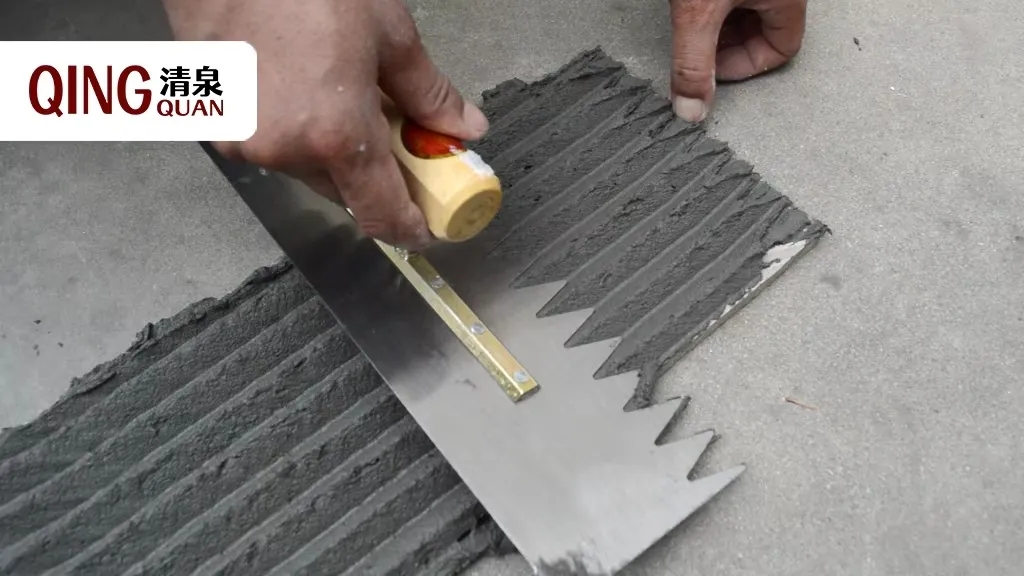
Hydroxyethyl cellulose can be used in construction products such as concrete mixtures, fresh mortar, gypsum plaster, or other cements, acting as a water retention agent during the construction process before they set and harden. In addition to improving the water retention of construction products, hydroxyethyl cellulose can also extend the correction and open time of plaster or cement. It can reduce crusting, slippage, and sagging. This improves construction performance, increases work efficiency, saves time, and also increases the volume of the mortar, thus saving raw materials.
7. Papermaking and Ink
Hydroxyethyl cellulose can be used as a sizing agent on paper and cardboard, and as a thickener and suspending agent for water-based inks. In the papermaking process, the superior properties of hydroxyethyl cellulose include compatibility with most gums, resins, and inorganic salts, low foaming, low oxygen consumption, and the ability to form a smooth surface film. This film has low surface permeability and strong gloss, and can also reduce costs. Paper coated with hydroxyethyl cellulose can be used for high-quality printing. In water-based ink manufacturing, water-based inks thickened with hydroxyethyl cellulose dry quickly, have good color dispersion, and do not cause sticking.
8. Ceramics
It can be used to formulate high-strength adhesives for ceramics.
9. Toothpaste
It can be used as a thickening agent in toothpaste manufacturing.
10. Textiles
It can be used as a binder and sizing agent in textile printing pastes and latex coatings; and as a thickening agent for carpet backing sizing materials. In fiberglass, it is used as a molding agent and binder; in leather pastes, it can be used as a modifier and binder. It provides a wide viscosity range for these coatings or adhesives, allowing for more uniform and rapid adhesion of the coating, and improving printing clarity.


